


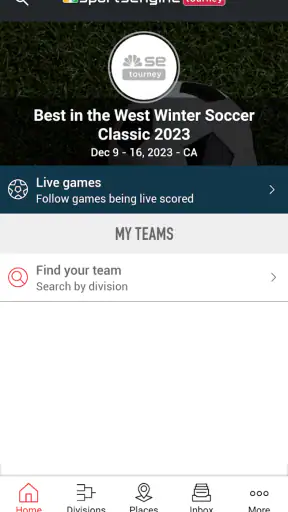
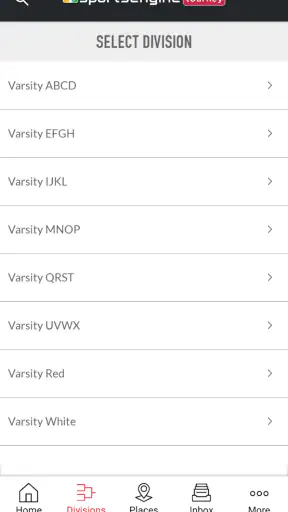
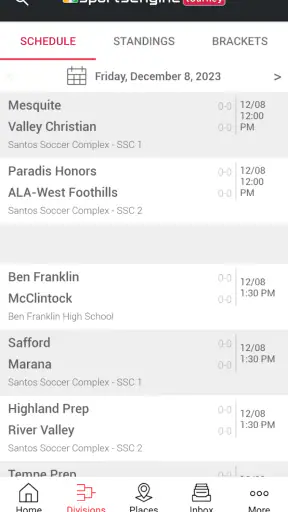
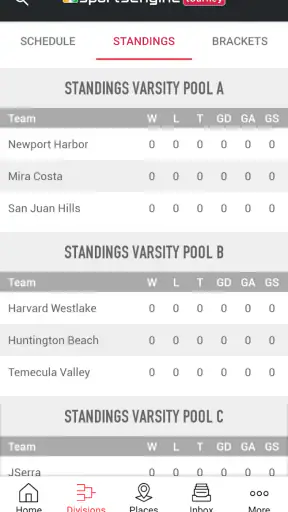
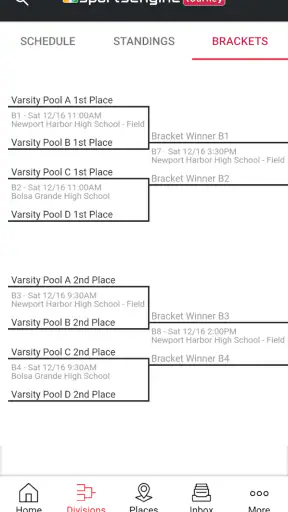
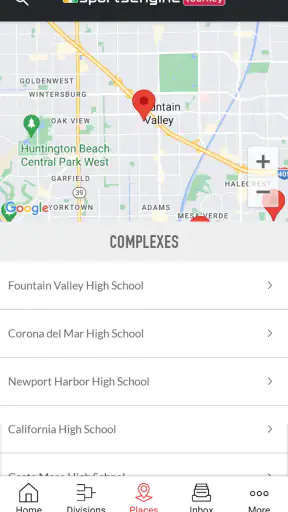
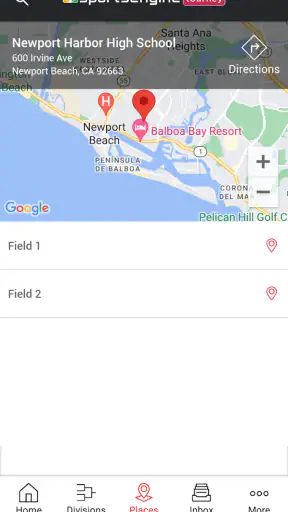
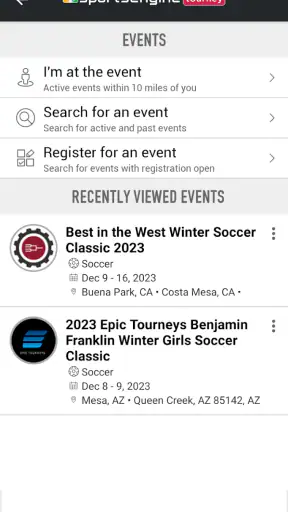
When I need to follow a youth or amateur tournament, the hardest part is rarely the sport itself. It is keeping track of changing game times, scores, and updates while moving between fields, gyms, or courts. SportsEngine Tourney is built around that specific problem. It is a free sports app from VersantMedia that puts tournament information into a mobile format, and in my experience its value comes from reducing the amount of searching and guesswork involved on a busy competition day.
I would not describe it as an all-purpose sports companion. It is much more focused than a general score app or a league-management platform. Its purpose is to help people stay connected to a tournament schedule and its results. That narrow focus is also its main strength: when the event information is available through the app, I can check the essentials quickly instead of relying on printed brackets, group messages, or repeatedly refreshing a browser page.
The app belongs in the sports category and is available at no purchase cost, although optional in-app purchases are listed at $0.99 per item. It is rated for Everyone, which fits its audience well: players, parents, coaches, volunteers, and spectators can all understand the basic purpose without needing technical knowledge. Its current version is 1.24.3, and it works on devices running Android 6.0 or later.
Why tournament updates are the real feature
The central capability is access to up-to-the-minute tournament schedules, scores, and updates. That wording sounds simple, but the practical effect is more important than it first appears. Tournament days are fluid. A game may finish earlier than expected, a later round may be assigned to a different venue, or a team may need to wait for another result before knowing what comes next. A static schedule can become outdated quickly.
SportsEngine Tourney gives me a single place to check the current state of the event. Instead of treating the original schedule as permanent, I can use the app as a live reference point. That distinction matters most when several games are happening at once and the information I received earlier in the day is no longer enough.
I especially like this approach for spectators who are not responsible for managing the tournament. A parent may know the team name but not remember the exact bracket path. A relative may arrive after the opening game and need to work out where to go. A coach may want to confirm the next assignment without carrying a folder of printed pages. The app is useful because it starts with the event rather than forcing every person to build their own tracking system.
There is also a psychological benefit. Tournament communication often becomes fragmented across announcements, text messages, social posts, and conversations near the entrance. A dedicated tournament app cannot eliminate all confusion, but it gives people a more sensible first place to look. The best use of SportsEngine Tourney is not constant browsing; it is having a dependable checkpoint whenever the day changes.
What checking the app feels like during an event
In a realistic scenario, I might arrive at a venue expecting a particular match to begin soon. Rather than asking another parent whether the schedule has changed, I would open the app and check the tournament information. If the current score or update has already been posted, I get a clearer idea of what is happening and whether I need to hurry, wait, or move to another part of the venue.
That small workflow becomes more valuable when I am following multiple teams or several stages of a competition. I do not have to remember every detail at once. The app acts as an external memory for the event, which is exactly what a phone is good at. I can concentrate on watching the game instead of repeatedly trying to reconstruct the bracket from scattered messages.
For a coach, the same capability can support a different routine. The coach may check the next scheduled game before gathering players, then look again after the current match to see whether the tournament has posted a new result or update. The app does not replace direct communication with organizers, but it can reduce unnecessary interruptions when the question is simply, “What is the latest tournament information?”
Parents gain a similar advantage when they are balancing tournament duties with everyday responsibilities. Someone may need to leave the venue briefly, arrange food, or pick up another child. A current schedule and score view makes it easier to return with some context instead of depending entirely on a phone call. I would still confirm important changes with an organizer, but the app gives me a practical starting point.
How I would use it before, during, and after play
Before the event, I would use the app to become familiar with the tournament information rather than waiting until the first game begins. Knowing where the schedule and results are located saves time later. This is one of the less obvious benefits of a focused app: the preparation is not exciting, but it prevents frantic searching when the venue is crowded and attention is divided.
During play, I would avoid treating every displayed update as a reason to interrupt the match I am watching. The better habit is to check at natural points: before leaving one venue, after a game ends, or when the people around me start discussing a possible change. This keeps the app useful without turning it into another distraction.
After a game, the score information can help me understand the tournament’s next step. If I am following a team, I can use the result as a cue to check what comes next. If I am only attending one match, the app still helps me decide whether there is another worthwhile game to watch. The important workflow is sequential: check the current result, then use the updated tournament context to plan the next move.
One practical tip is to keep the app as a reference rather than assuming it is the only communication channel. A tournament may still use announcements or staff instructions for urgent changes. SportsEngine Tourney is strongest when I combine its live event information with common sense: check the app, pay attention at the venue, and ask an organizer when a decision affects the team directly.
The tournament day where it makes the biggest difference
The clearest use case is a multi-game day with several possible outcomes. Imagine a family following a team through pool play and later rounds. The family may not know whether the team will play again immediately, which court will be used, or how the latest result affects the next assignment. Carrying a printed schedule helps at the beginning, but it becomes less convenient as results accumulate and the day moves on.
In that situation, I would open SportsEngine Tourney after each completed game, check the latest score, and then look at the updated schedule before walking to the next location. That is a modest routine, but it solves a real problem: it connects the result that just happened with the decision I need to make next.
The app is also well suited to spectators who are following an event rather than one specific player. At a large tournament, a person may want to watch a particular stage or find out which teams are progressing. Current scores and schedule updates make that possible without depending on word of mouth. I would find this especially helpful when arriving late, because I could orient myself from the tournament information instead of asking several people to explain the day.
Volunteers and tournament staff may find the app useful as a shared reference for routine questions. It can help point people toward the latest posted schedule or result, which may reduce repeated requests at an information desk. I would not use it as a substitute for staff judgment, but it can make basic information easier for attendees to access themselves.
There is a subtle trade-off here. The app’s usefulness depends on the tournament information being current and correctly posted. A mobile interface can display updates efficiently, but it cannot create an accurate result before someone records it. That means the app should be judged as a communication tool, not as an independent source that can verify every event detail on its own.
Where it compares well with ordinary alternatives
The usual alternative is a printed schedule. Paper is dependable when the event stays exactly on plan, and it never runs out of battery. However, it is awkward when a game time or location changes. I can mark a paper bracket, but I still need to know whether the information has been updated elsewhere. SportsEngine Tourney is more convenient for a changing event because the phone becomes the place I revisit for the latest posted status.
Another alternative is a general sports-score app. Those apps can be excellent for professional leagues and widely covered competitions, but they may not be designed around a local tournament’s particular schedule. SportsEngine Tourney feels more appropriate when the event itself is the center of attention rather than a major league or national competition.
Group messaging is fast, but it is also easy to miss. Important details can disappear under casual conversation, and different people may repeat slightly different versions of the schedule. A dedicated tournament view offers better organization. On the other hand, messages may still be faster for urgent personal instructions, so I would not abandon them completely.
A browser page can provide similar information, especially for someone who does not want another app installed. The advantage of a dedicated app is convenience during repeated checks. I can return to the tournament-focused experience instead of navigating through a general website each time. The disadvantage is that an app takes storage and may feel unnecessary for someone attending only one short game.
The friction and limitations I would consider first
The focused design is not automatically right for everyone. If I only want broad sports news, professional scores, standings, or live coverage across many competitions, this is probably too narrow. Its identity is tied to tournament information, so it should not be mistaken for a universal sports dashboard.
There is also a difference between viewing information and controlling the event. The app can help me follow schedules, scores, and updates, but I would not expect it to replace organizers, coaches, or venue announcements. If a change affects whether a child must report to a specific place, I would still confirm it through the responsible person when possible. That is not a flaw unique to this app; it is an important boundary for any digital schedule.
Battery and connectivity are practical concerns for any live mobile tool. A phone is less useful when its battery is nearly empty or the venue has poor service. I would prepare by charging the device before leaving and keeping the original schedule or key contact details available when the event matters. The app reduces dependence on paper, but I would not make myself completely dependent on one screen.
Optional purchases at $0.99 per item are another point to keep in mind. The main app is free, which makes it easy to try, but I would look carefully at any purchase prompt before confirming it. For a family attending one event, the free access may be all that is needed; for someone using the app repeatedly, understanding which extras are optional helps avoid accidental spending.
The age rating of Everyone is reassuring for family use, but that does not mean every person will find the experience equally valuable. A spectator who already receives accurate updates directly from a coach may gain little. Likewise, someone who prefers a paper bracket and does not need changing information may see the app as an extra step rather than a convenience.
Small habits that make the app more useful
I would begin by identifying the exact tournament before relying on the information shown. This matters when several events, age groups, or divisions are active around the same time. Choosing the wrong event can create more confusion than using no app at all, so I would slow down during setup and confirm the team or competition context.
I would also check the schedule at transition points instead of refreshing continuously. This saves battery, keeps my attention on the venue, and makes the information easier to interpret. A score update is most useful when I connect it to a decision: stay, move, call someone, or wait for the next posted detail.
For families, I would share the same basic routine with everyone attending. One person can check the latest event information, then communicate the practical conclusion to the group. That avoids five people independently interpreting a bracket and arriving at different assumptions about where to go next.
For coaches, I would use the app to support, not replace, the team’s own meeting process. Players still need a clear instruction about when and where to gather. The app is better for confirming the tournament context than for delivering every team-specific responsibility.
Who will appreciate it most
SportsEngine Tourney is most useful for people who spend enough time at tournaments for schedule changes and results to affect their plans. Parents following a team, coaches moving between games, spectators watching several brackets, and volunteers answering routine questions all have a clear reason to keep a tournament-focused app nearby.
It is also a sensible choice for someone who dislikes group-chat chaos. If I often miss messages or cannot tell which schedule version is current, having a dedicated place to check is a meaningful improvement. The app’s value grows with the number of times I need to make a decision based on tournament progress.
It is less compelling for a casual spectator attending one game at a fixed time. In that case, a message from the team or a printed schedule may be enough. I would also choose a broader sports app if my main interest were following many sports, professional competitions, news, or statistics outside the tournament setting.
The app has reached a substantial audience, with over a million installs, a 4.6 average from around sixteen thousand ratings, and roughly three thousand seven hundred reviews. Those figures suggest that its focused purpose resonates with many users, though popularity alone would not decide my choice. I would still base the decision on whether my events actually use the tournament information I need.
My recommendation after using it
I see SportsEngine Tourney as a practical companion for a specific kind of sports day. It does not try to become a complete social network, news service, or coaching system. Instead, it concentrates on keeping tournament schedules, scores, and updates close at hand. That concentration makes it easier to recommend to someone who regularly attends organized competitions and harder to recommend to someone seeking a general sports app.
VersantMedia released it on July 7, 2016, and the current version is 1.24.3. The long-running presence and strong average rating give it credibility, but the deciding question remains simple: will your tournament information be something you need to check repeatedly? If yes, the app can replace a messy combination of paper, memory, and scattered messages with a more convenient routine.
My honest advice is to install it before the tournament rather than waiting until confusion starts. Learn where the event schedule and results appear, charge your phone, and keep direct organizer communication available for important changes. Used that way, SportsEngine Tourney is a focused and genuinely useful tool for following a tournament as it unfolds. I would recommend it to active tournament families and coaches, while casual spectators and broad sports fans should probably stick with simpler or more general alternatives.


